
Education
Empowers the
PA Wildlife
Enthusiast
Learn more about the environment where your favorite species resides, and become a wildlife enthusiast who actually understands the land you love so much.
Where would you like to explore?
Our habitat signs were created with today’s outdoor enthusiasts in mind.
Take your excursion to the next level as you learn about your environment while enjoying it. Each sign features facts about what you might find. Additionally, you can scan the QR code on each sign for a more in depth PDF or scroll down on this page to download from here.
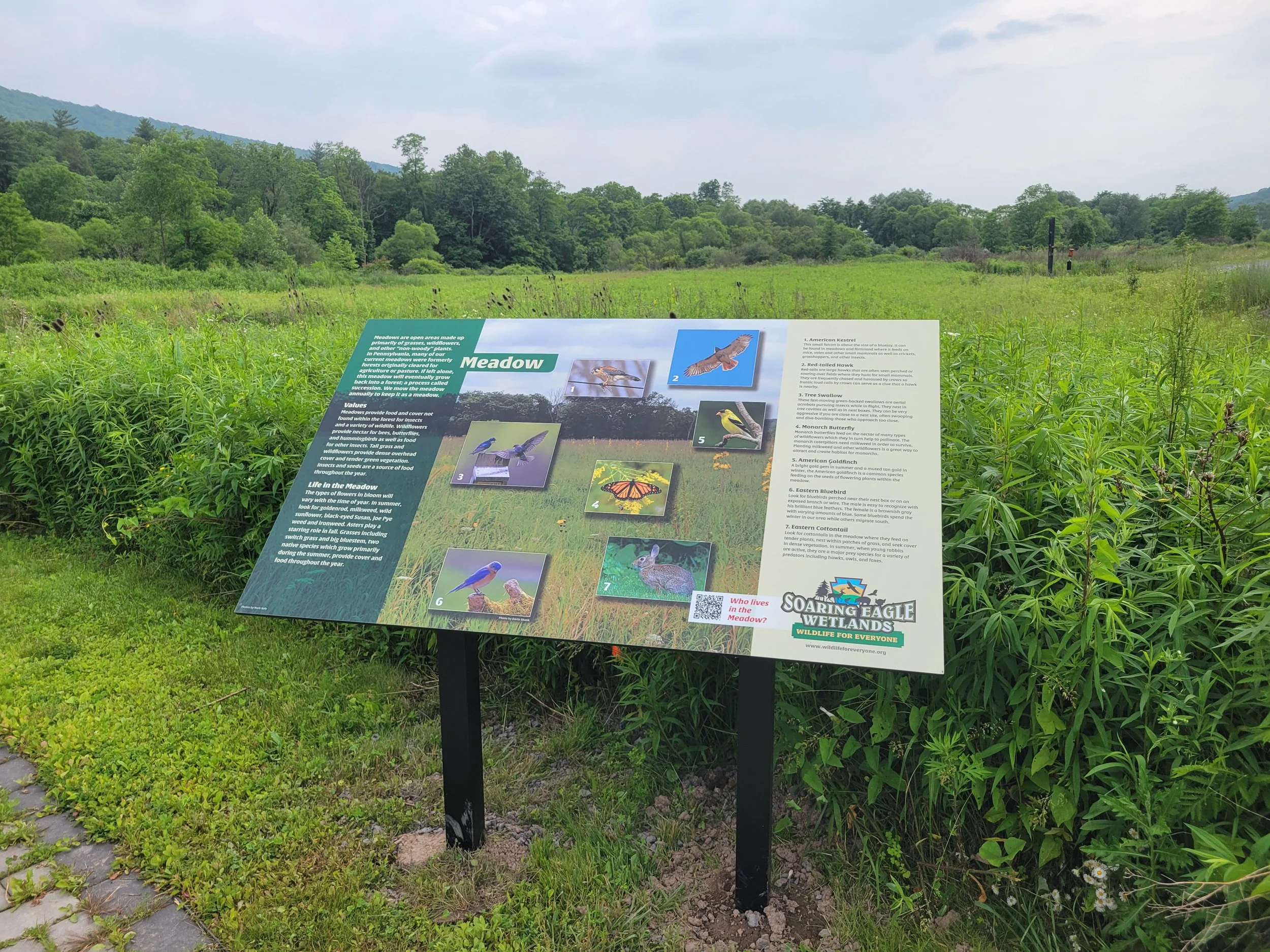
Open areas filled with flowing grasses and a variety of wildflowers, Meadows provide food and cover for insects and a variety of other wildlife. Flowers that bloom here vary throughout the year, making a visit to the Meadow a great option year-round. Download the PDF below to learn more about the Tree Swallow, the Eastern Cottontail, Red-tailed Hawk, Eastern Bluebird, American Kestrel, Monarch Butterfly, and American Goldfinch - all species that reside in Pennsylvania’s beautiful Meadows.
Meadow
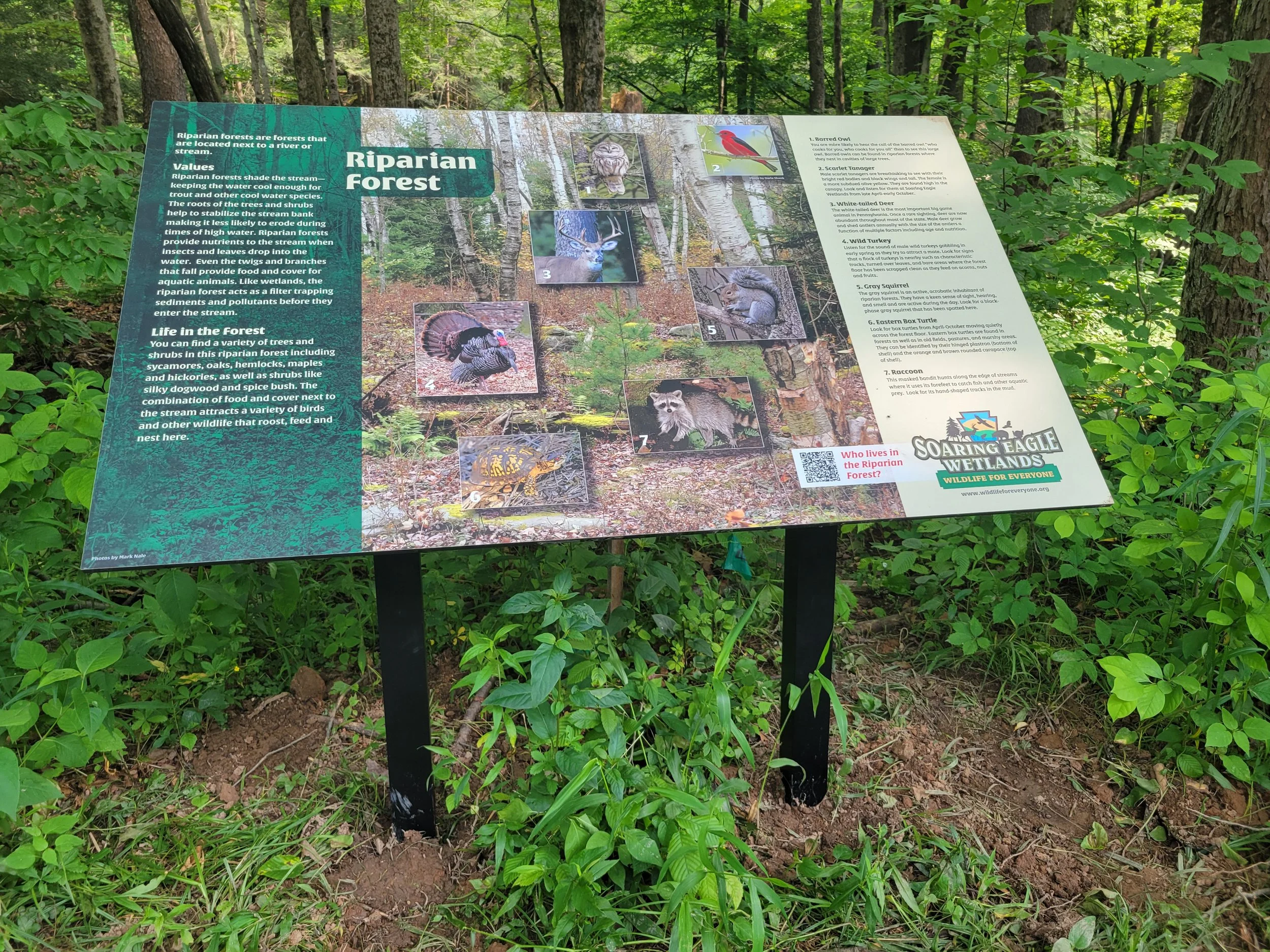
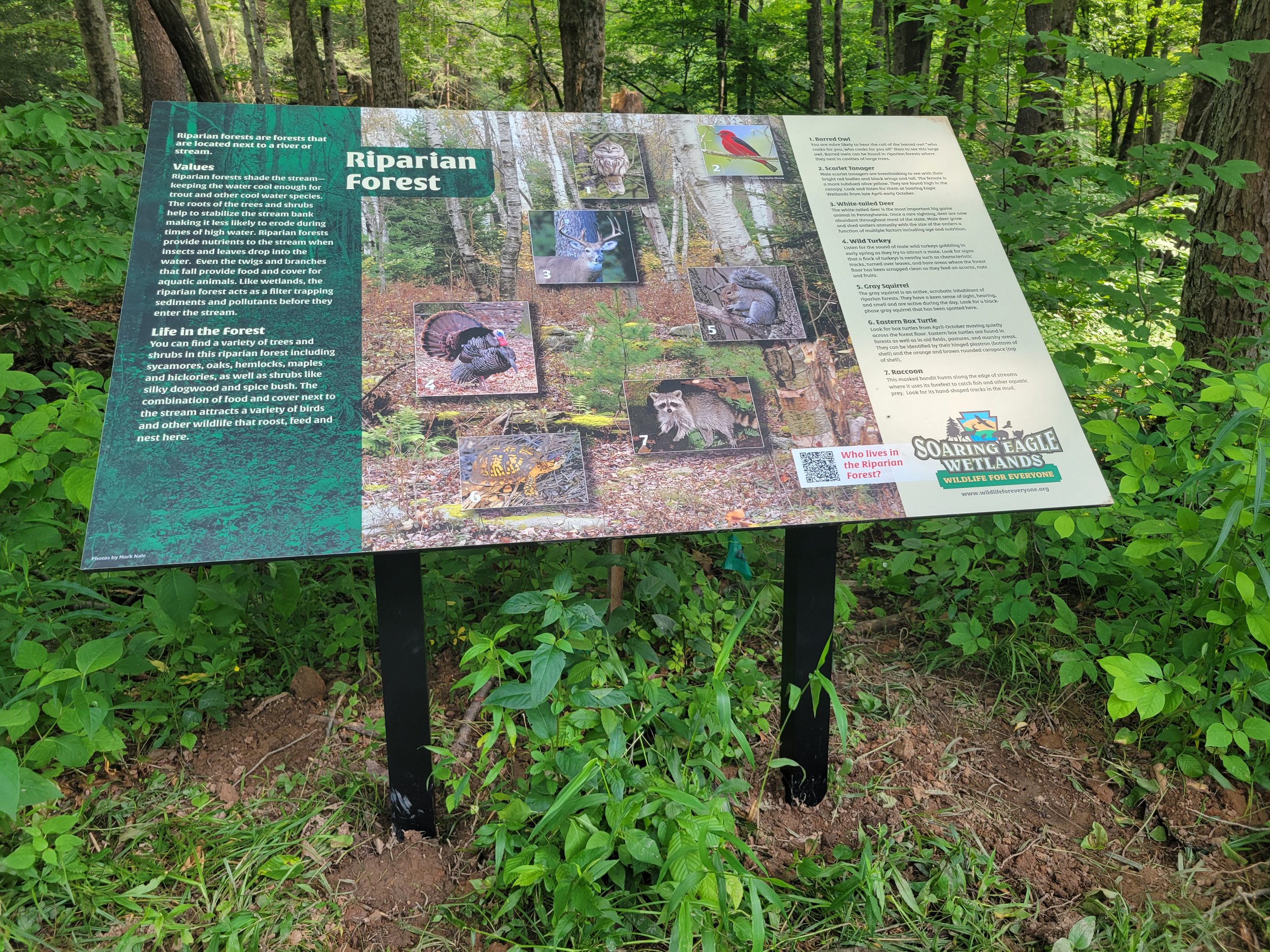
Located next to a river or a stream, riparian forests provide shade that keeps water cool enough for trout and other cool water species. The trees surrounding the stream stabilize the bank so that it’s less likely to erode during high water. A variety of trees and shrubs can be found here, including sycamores, oaks, hemlocks, maples, and the silky dogwood. Visit the Riparian Forest to practice your observation skills finding the animals and birds that blend in so well here. Download the PDF to learn more about the Barred Owl, Scarlet Tanager, White-tailed Deer, Wild Turkey, Gray Squirrel, Eastern Box Turtle, and Raccoon.
Riparian Forest
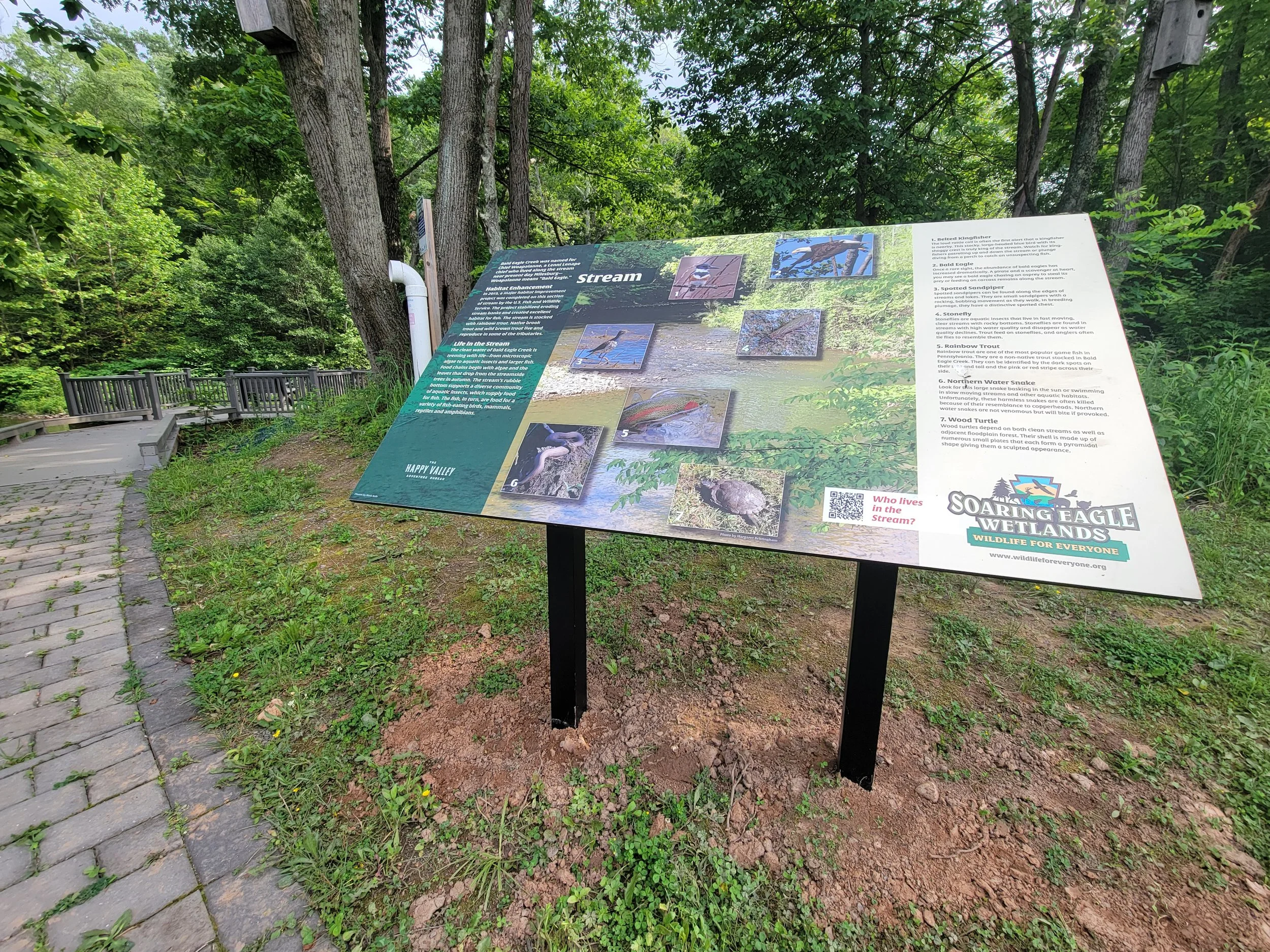
Bald Eagle Creek is a stream that is teeming with life! The food chain starts with algae and the leaves that drop from streamside trees, to aquatic insects that become food for fish, to fish that become food for birds and other reptile and amphibian stream visitors. This particular stream was nurtured by the U.S. Fish and Wildlife Service, who completed a project in 2019 to stabilize its eroding banks and improve the environment for native fish. Download the PDF to learn more about the Belted Kingfisher, Bald Eagle, Spotted Sandpiper, Stonefly, Rainbow Trout, Northern Water Snake, and Wood Turtle.
Stream
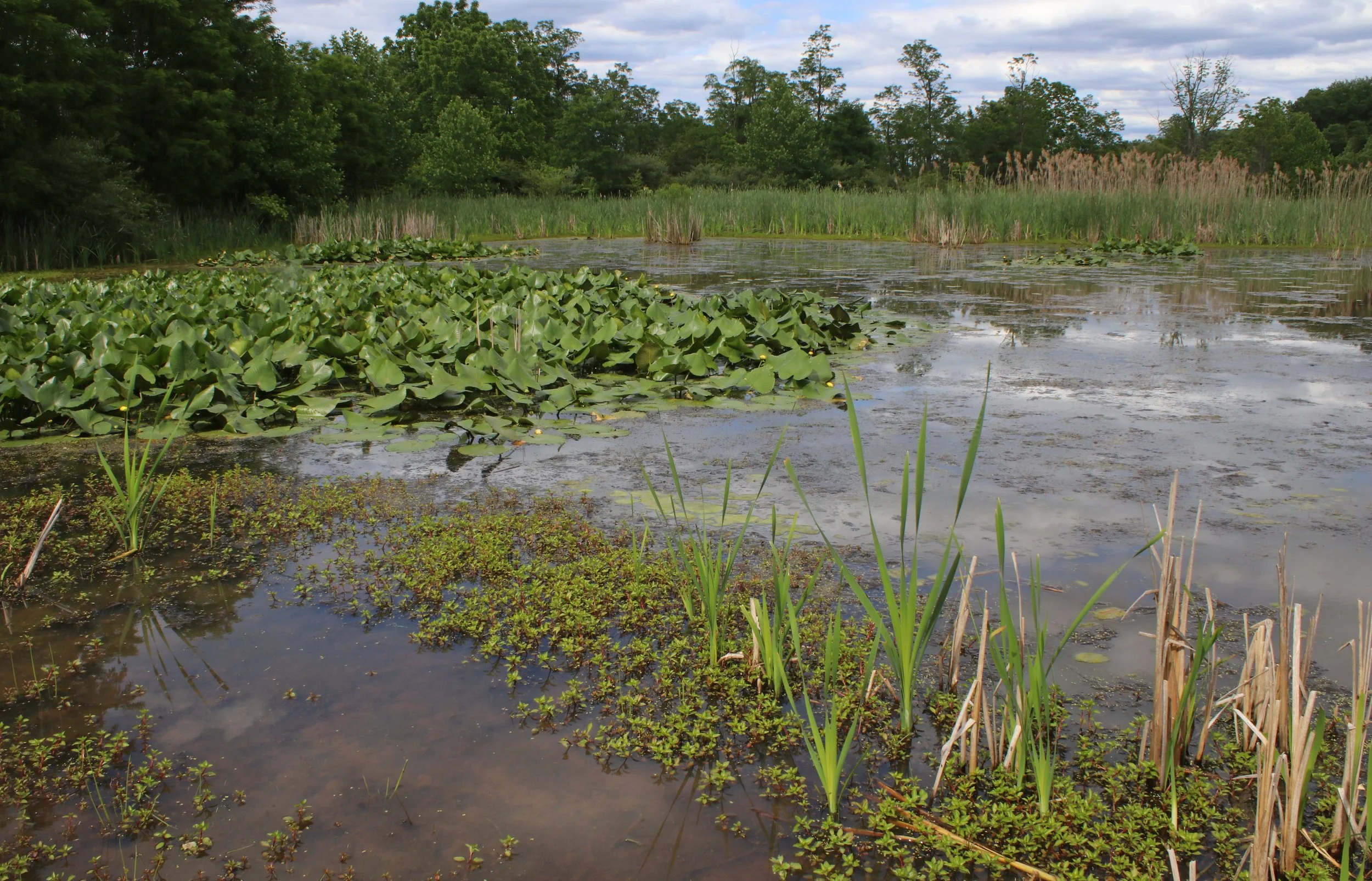
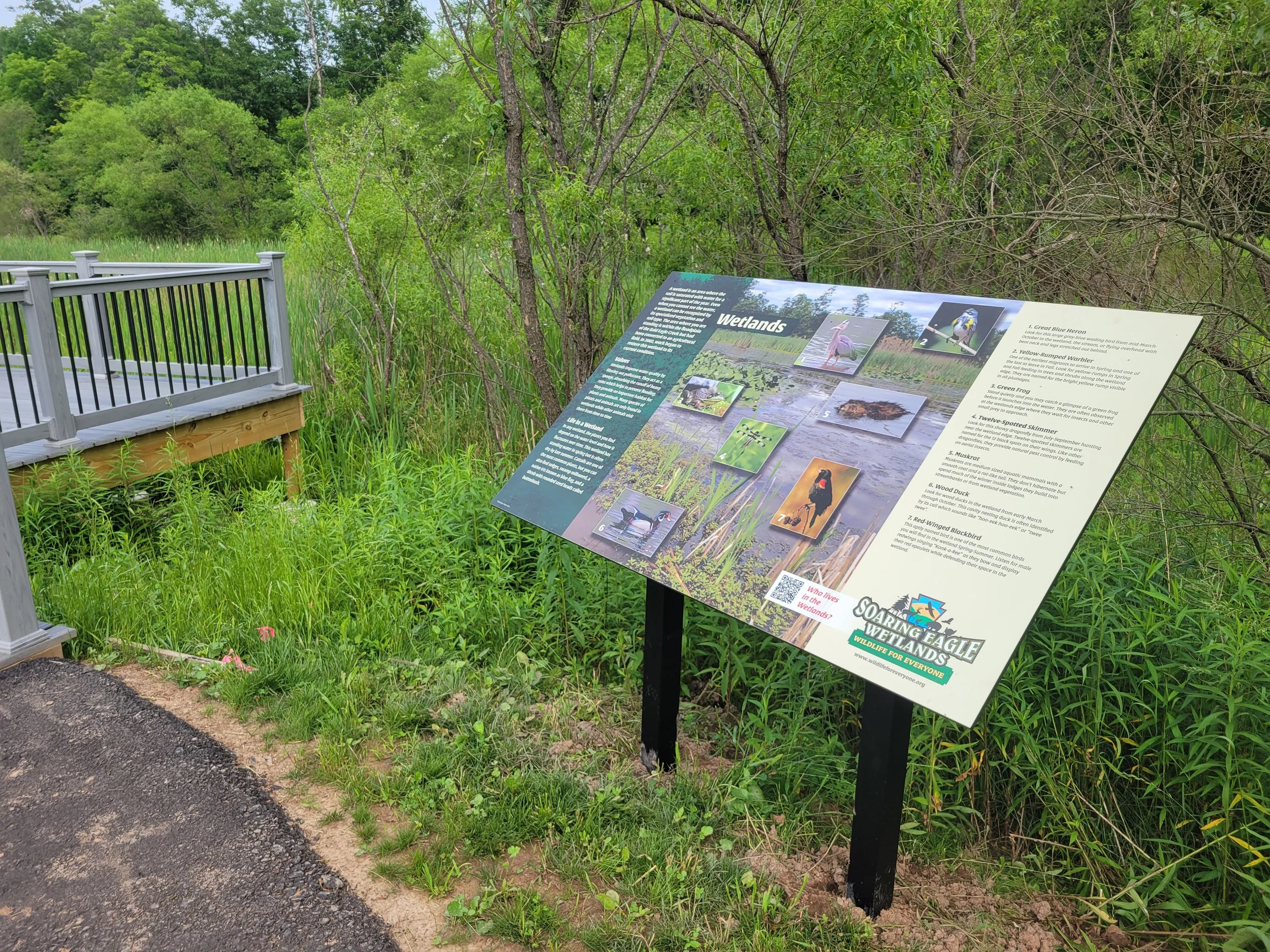
The soil of the Wetlands is saturated with water for most of the year, giving it a unique soil structure and specialized vegetation. Wetlands filter pollutants out of the water and absorb runoff to prevent flooding. You can often identify wetlands by the presence of the common Cattail, as well as sedges, swamp milkweed, or the buttonbush. Download the PDF to learn more about the Great Blue Heron, Muskrat, Red-Winged Blackbird, Wood Duck, Green Frog, Twelve-Spotted Dragonfly, and Yellow-Rumped Warbler.